HOW CURRENT MOVES
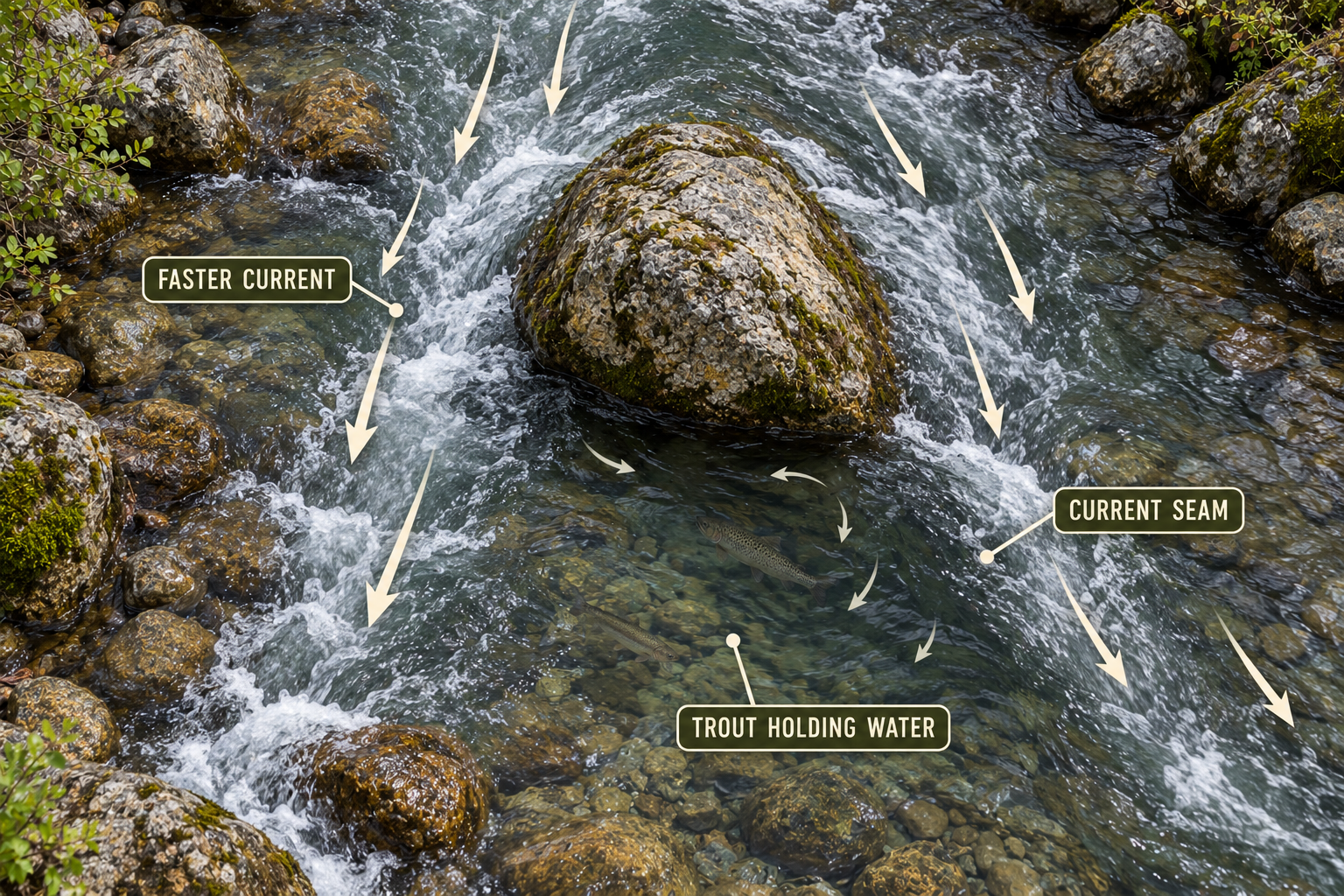
Moving water creates different speeds, directions, and pressures. These variations form seams, eddies, current breaks, and feeding lanes where trout hold and feed.
By learning to read these areas, you can identify productive water, present your fly more effectively, and understand where fish can conserve energy while still having access to food.
Fast Water
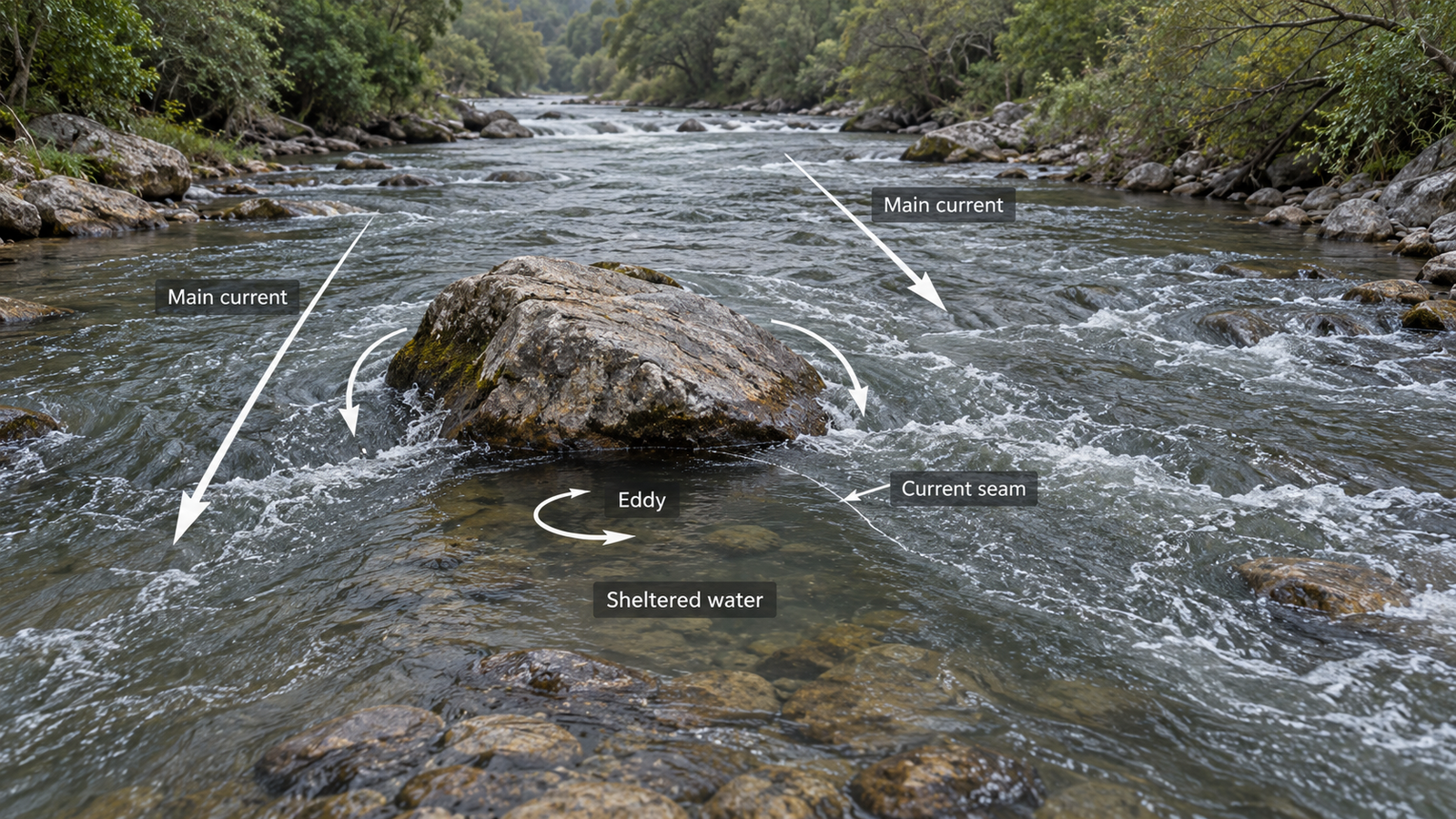
Faster current with greater turbulence and oxygen. Food moves quickly through this zone.
Slow Water
Calmer water with less current pressure. Trout often use these areas to rest and conserve energy.
Seam
The visible or invisible boundary where fast and slow water meet. Food often concentrates along seams.
Eddy
A circular current moving opposite the main flow. Trout can use eddies to rest while watching for food.
Current Break
An area of reduced flow created by rocks, logs, banks, or other structure. Fish often use the slower water behind it.
Feeding Lane
A natural travel path where food drifts downstream. Trout often position themselves beside or directly within it.
READING A CURRENT
Start by looking at how the water moves around rocks, banks, drop-offs, and changes in depth. Fast water often carries food, while nearby slower water can give trout a place to conserve energy. The most productive water is often found where those two conditions meet.