UNDERSTANDING STRUCTURE
Structure changes the way water moves and creates places where trout can rest, hide, feed, and avoid stronger current.
Rocks, wood, banks, vegetation, ledges, bends, depth changes, and other underwater features can all create productive holding water. Learning to recognize these features helps you decide where to focus before making the first cast.
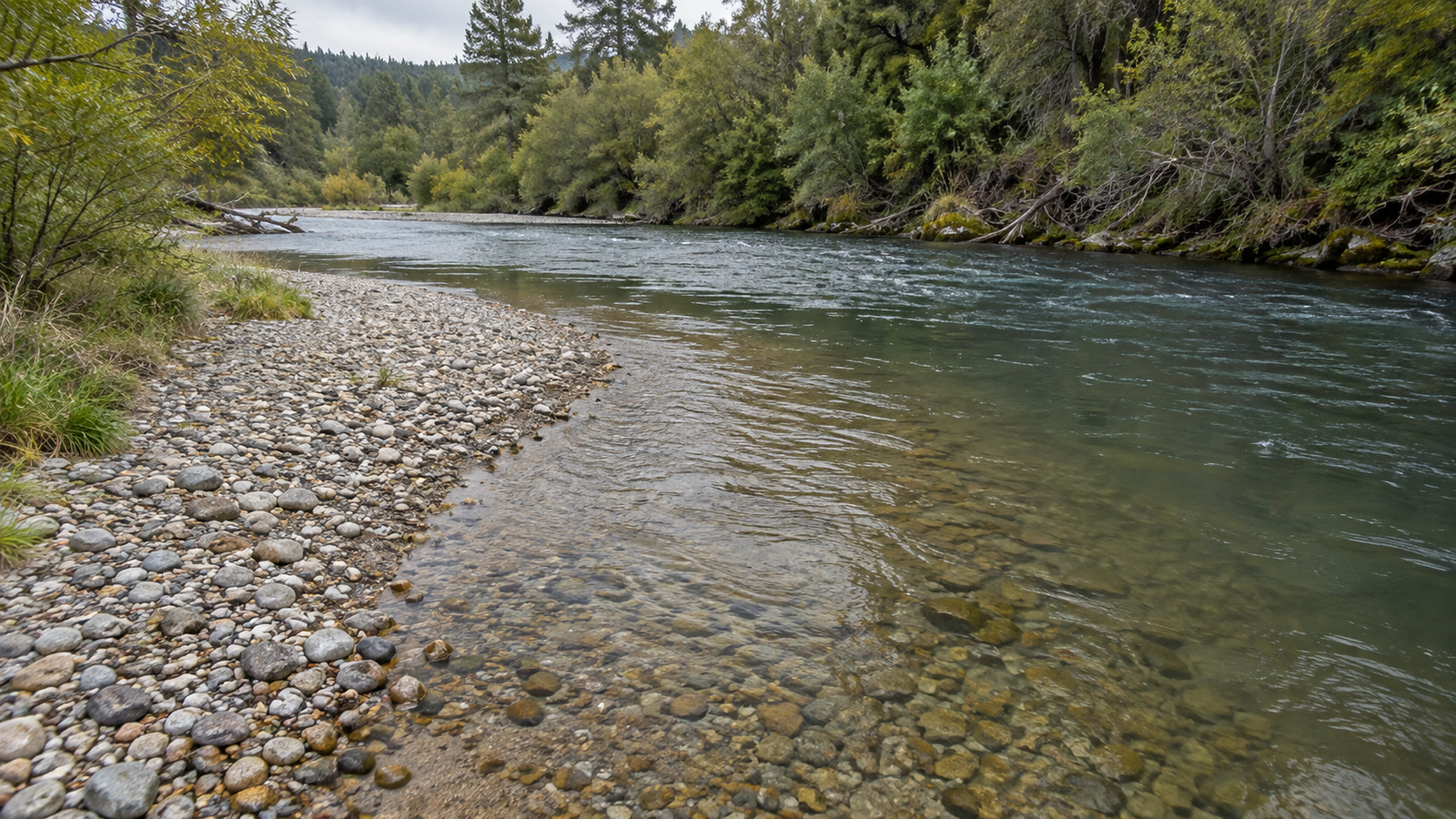
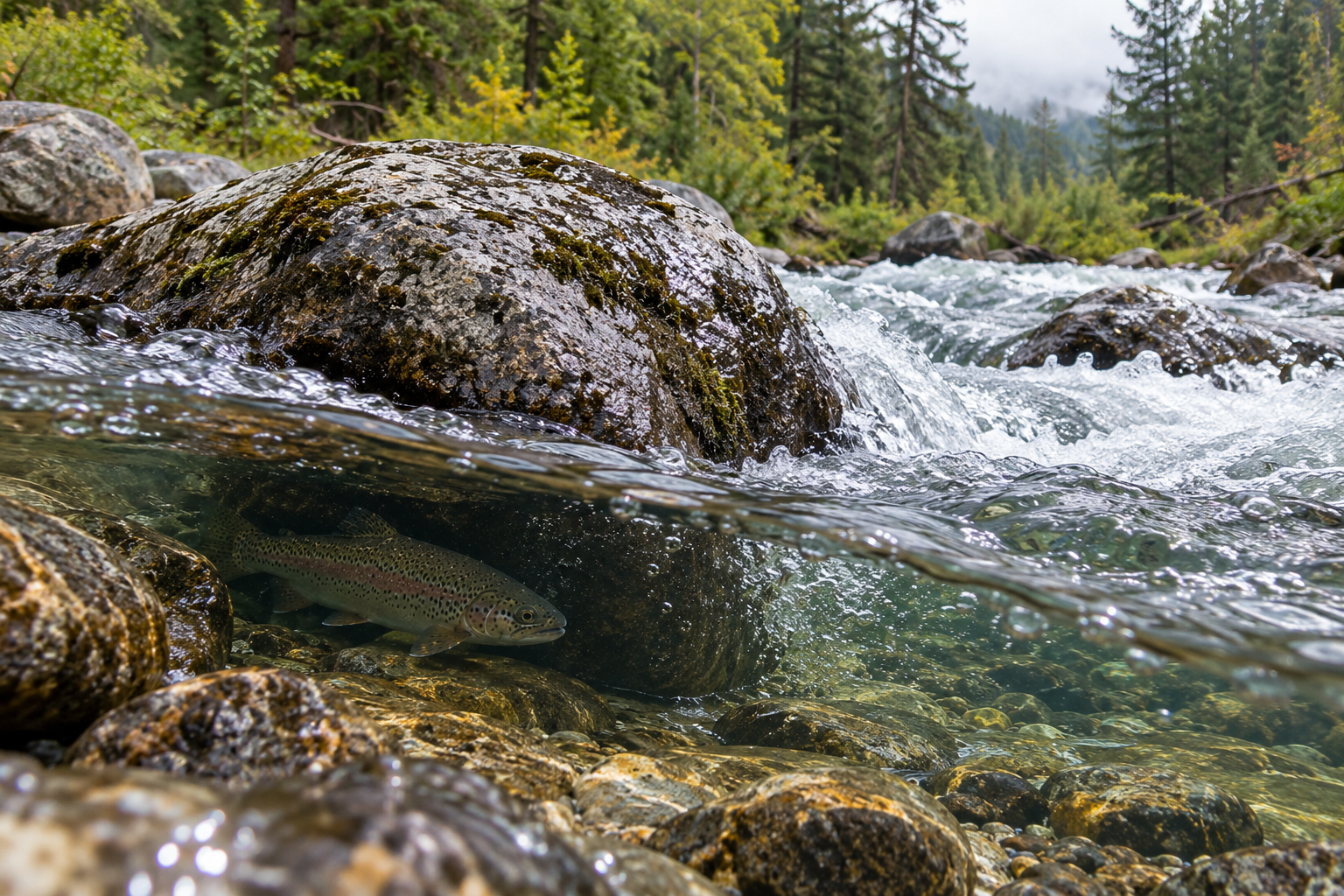
Behind Rocks
Large rocks interrupt current and create softer water behind them. Trout can conserve energy while remaining close to food drifting through the surrounding current.
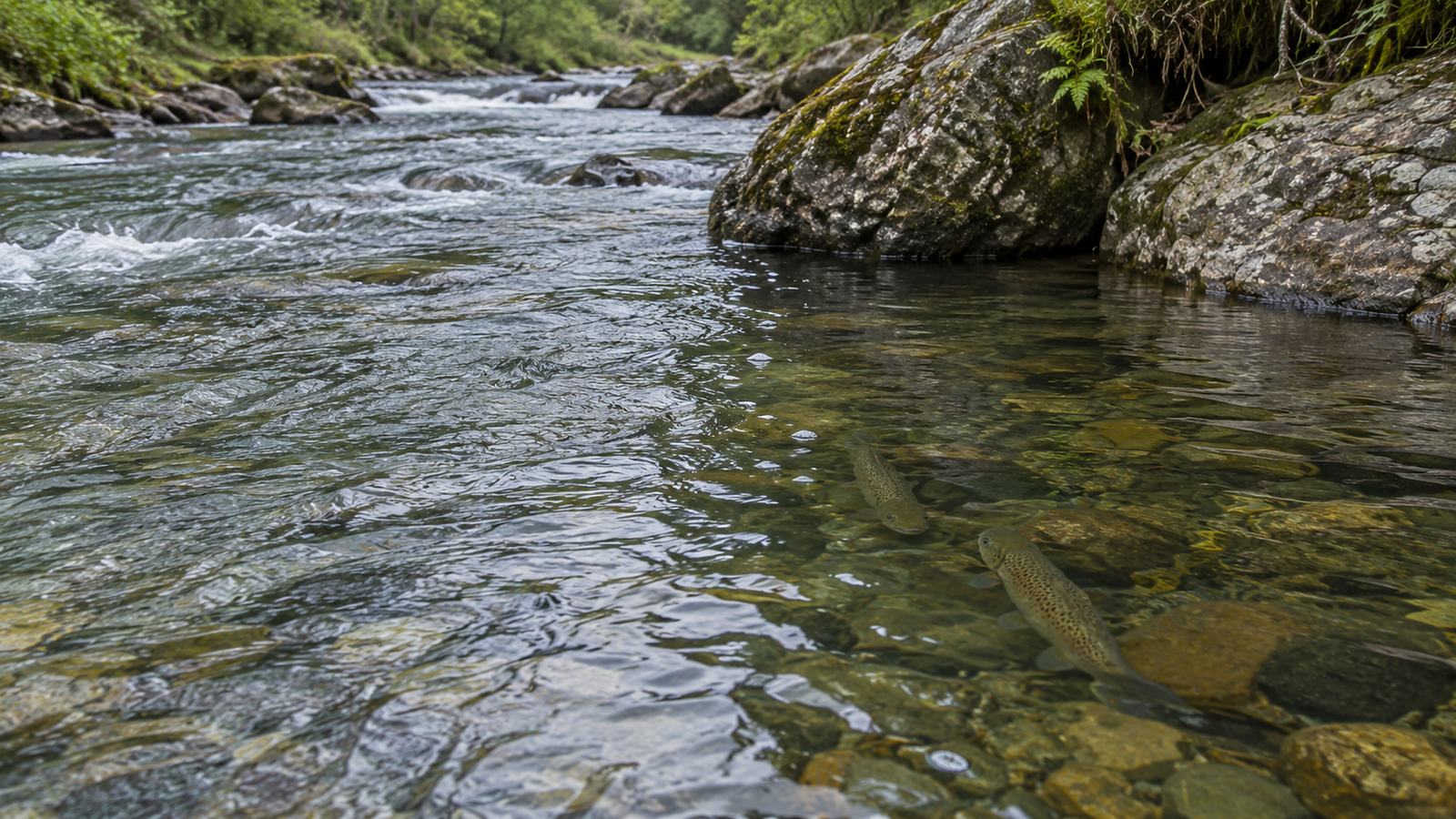
Beside Seams
Seams form where currents of different speeds meet. Trout can hold in softer water while feeding on insects and other food carried by the faster flow.
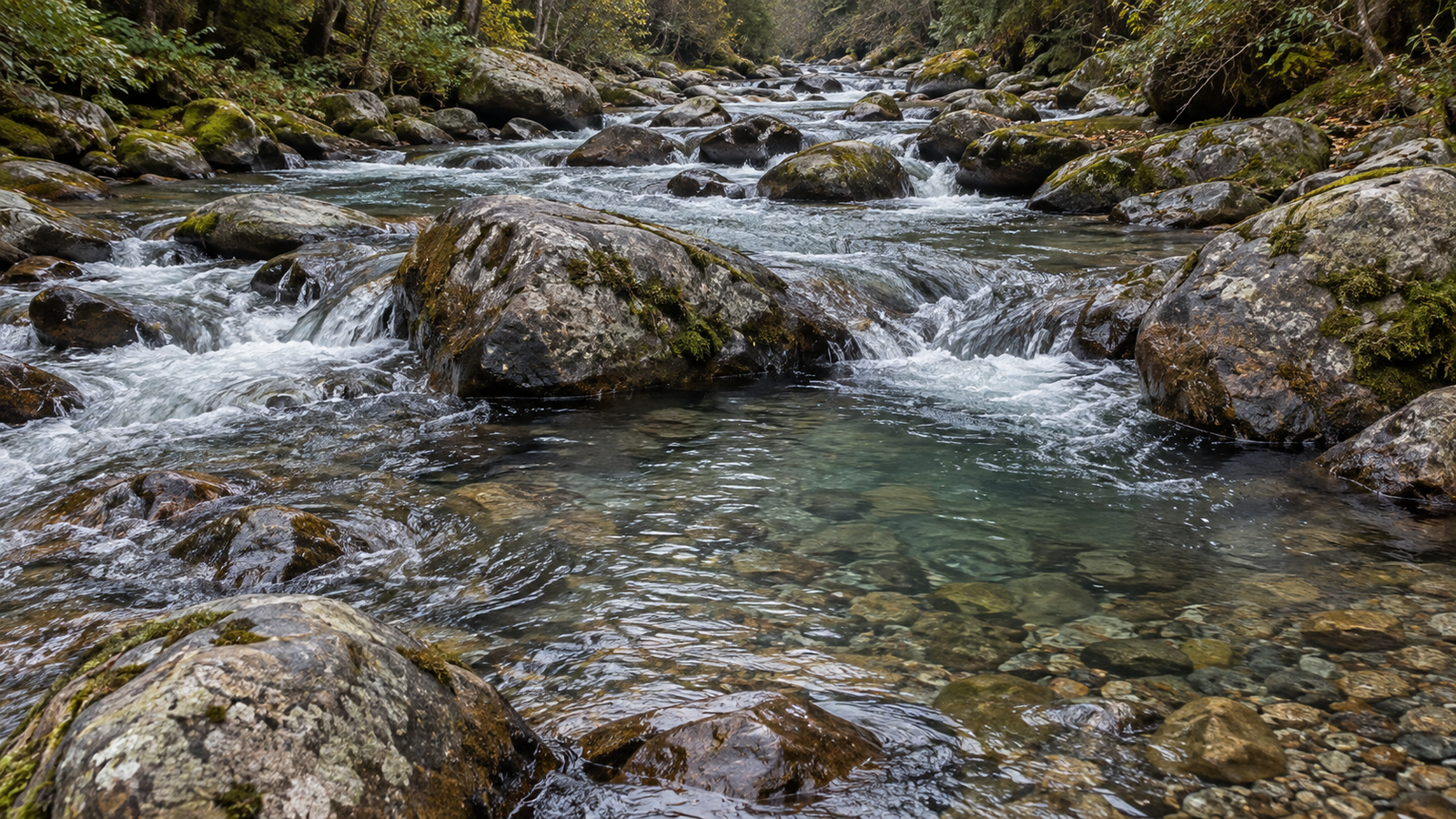
Pocket Water
Rocks create small protected pockets within faster water. These softer areas allow trout to hold close to fast-moving food without constantly fighting the strongest current.
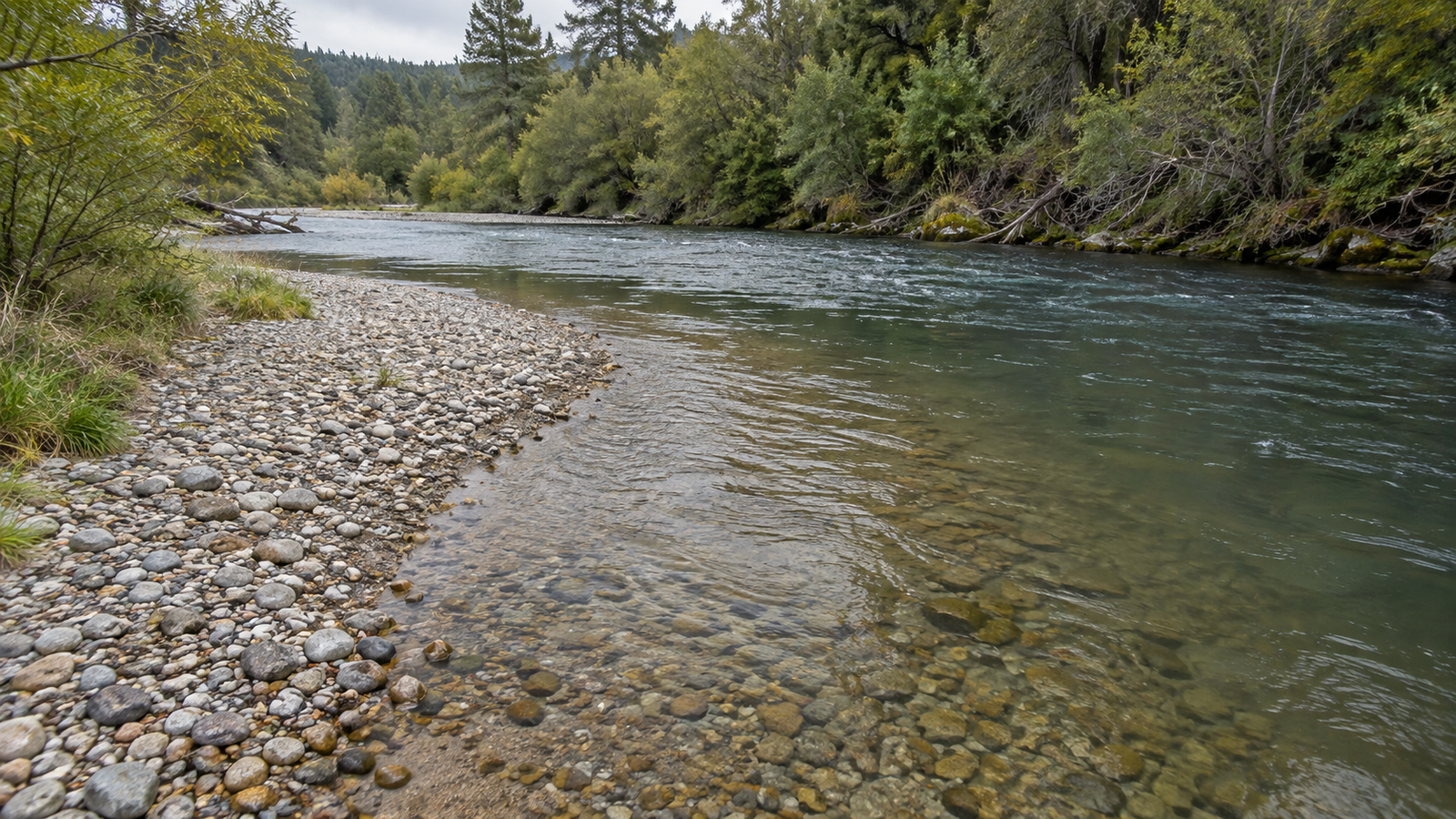
Inside Bends
Water often moves more slowly along the inside of a bend. Trout may use these softer areas to conserve energy while remaining close to the stronger main current.
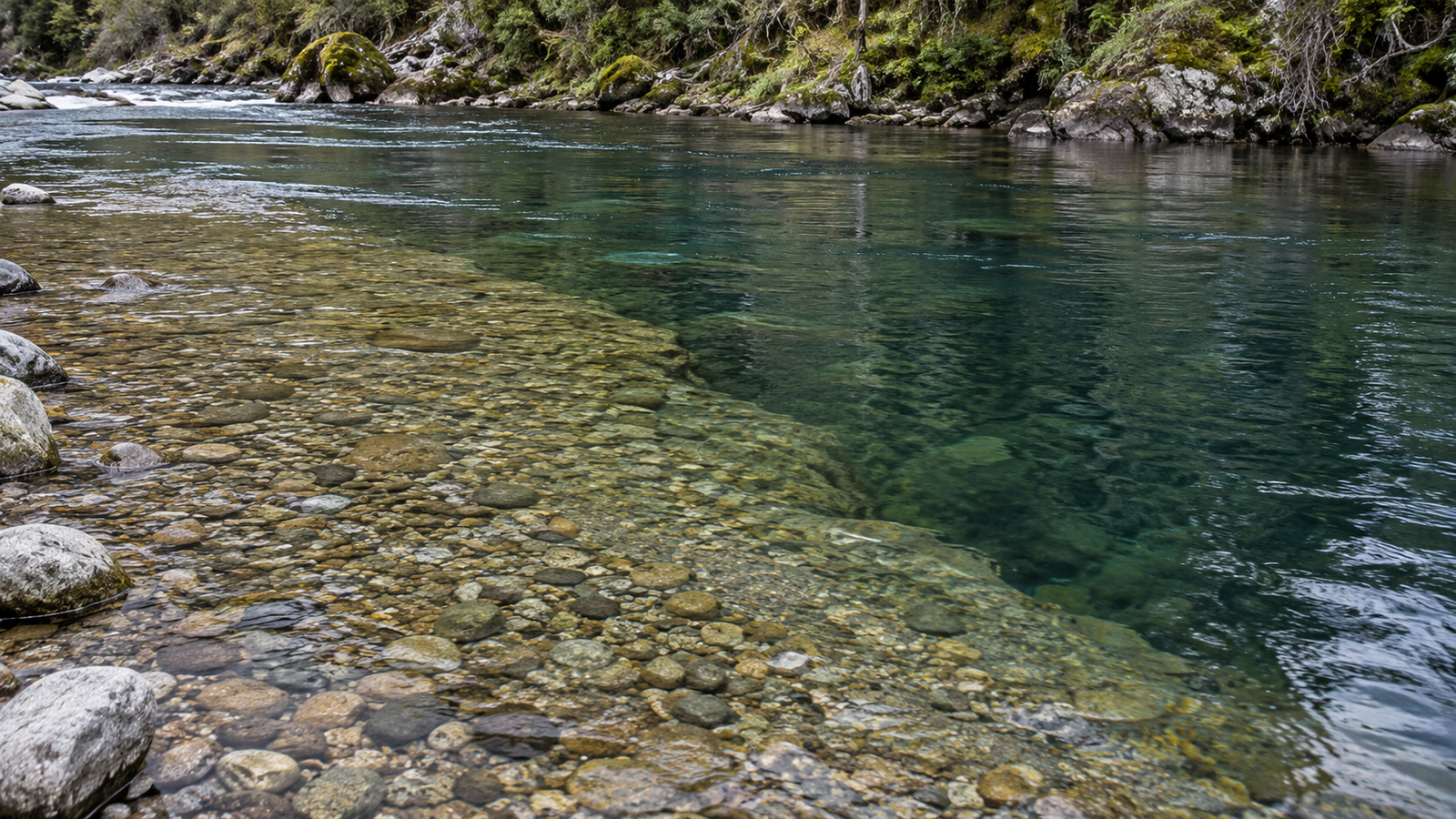
Drop-Offs & Deeper Channels
Changes in depth create edges and deeper holding zones. Trout can use these areas for protection while remaining positioned near faster current and feeding lanes.
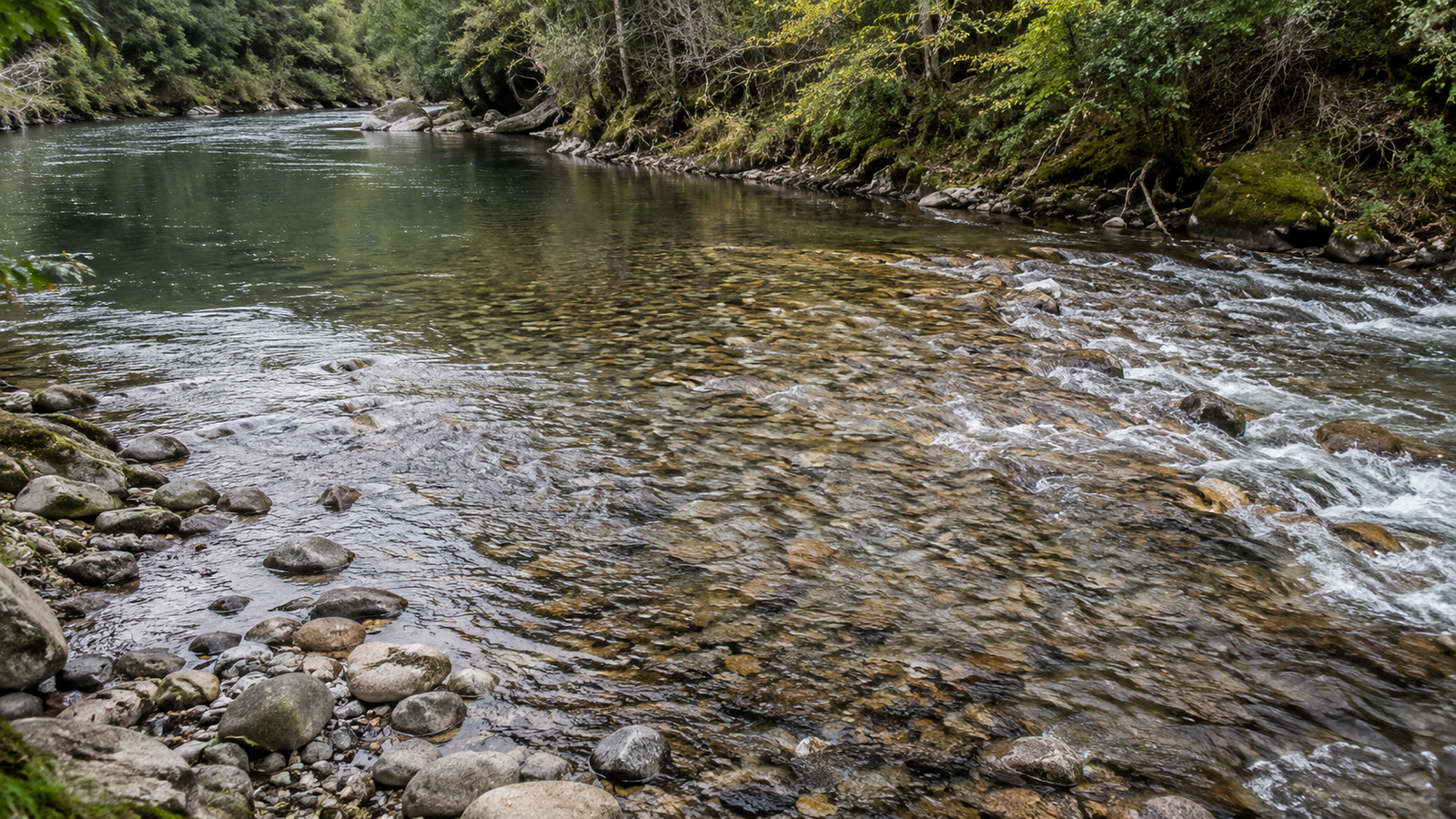
Tailouts
As deeper water becomes shallower near the end of a pool, current begins to accelerate. Trout may use these transition areas for feeding before water enters the next section.
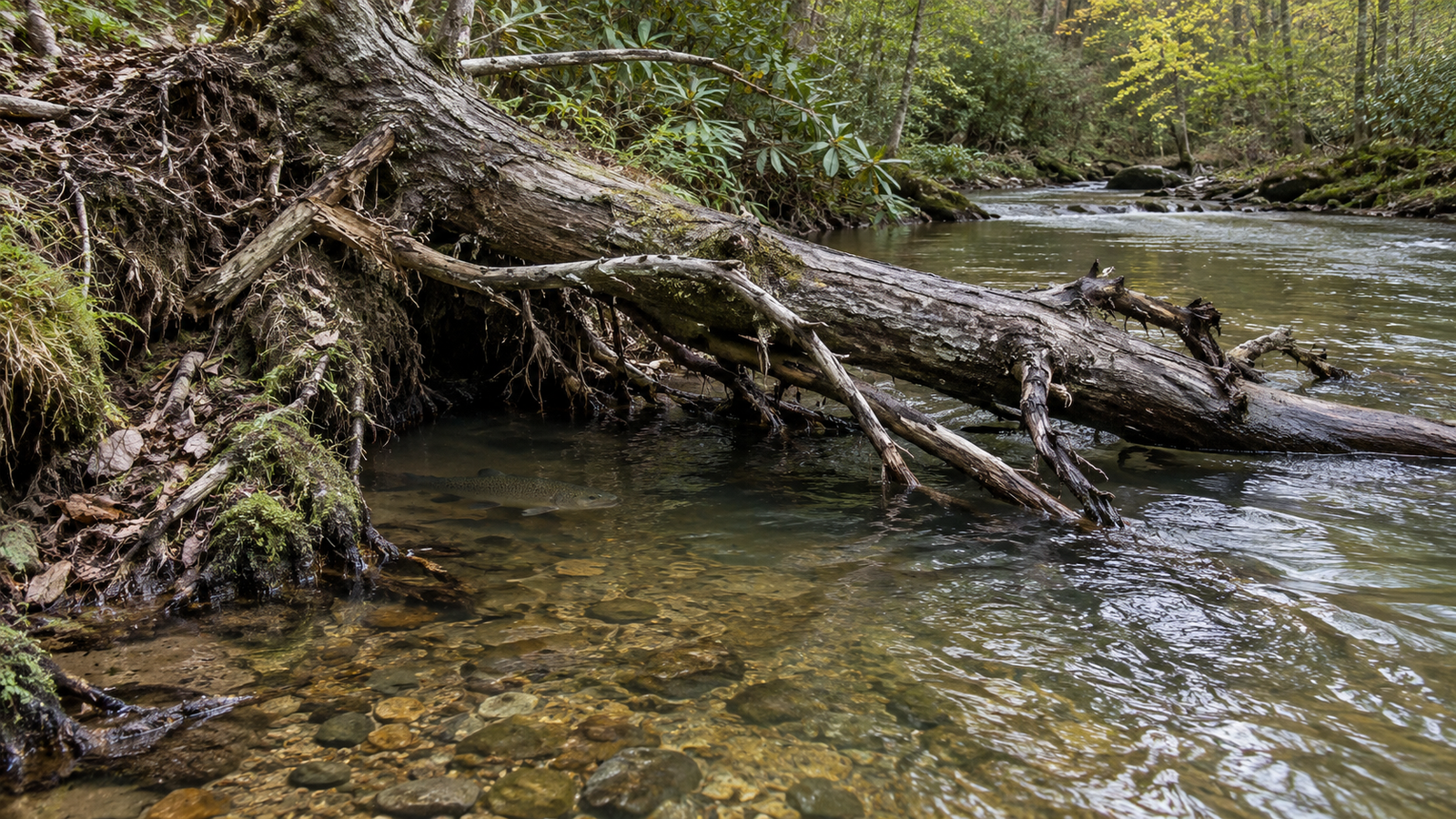
Trees & Woody Cover
Fallen trees, roots, branches, and shoreline cover can alter current, create shade, provide protection, and form productive holding water.
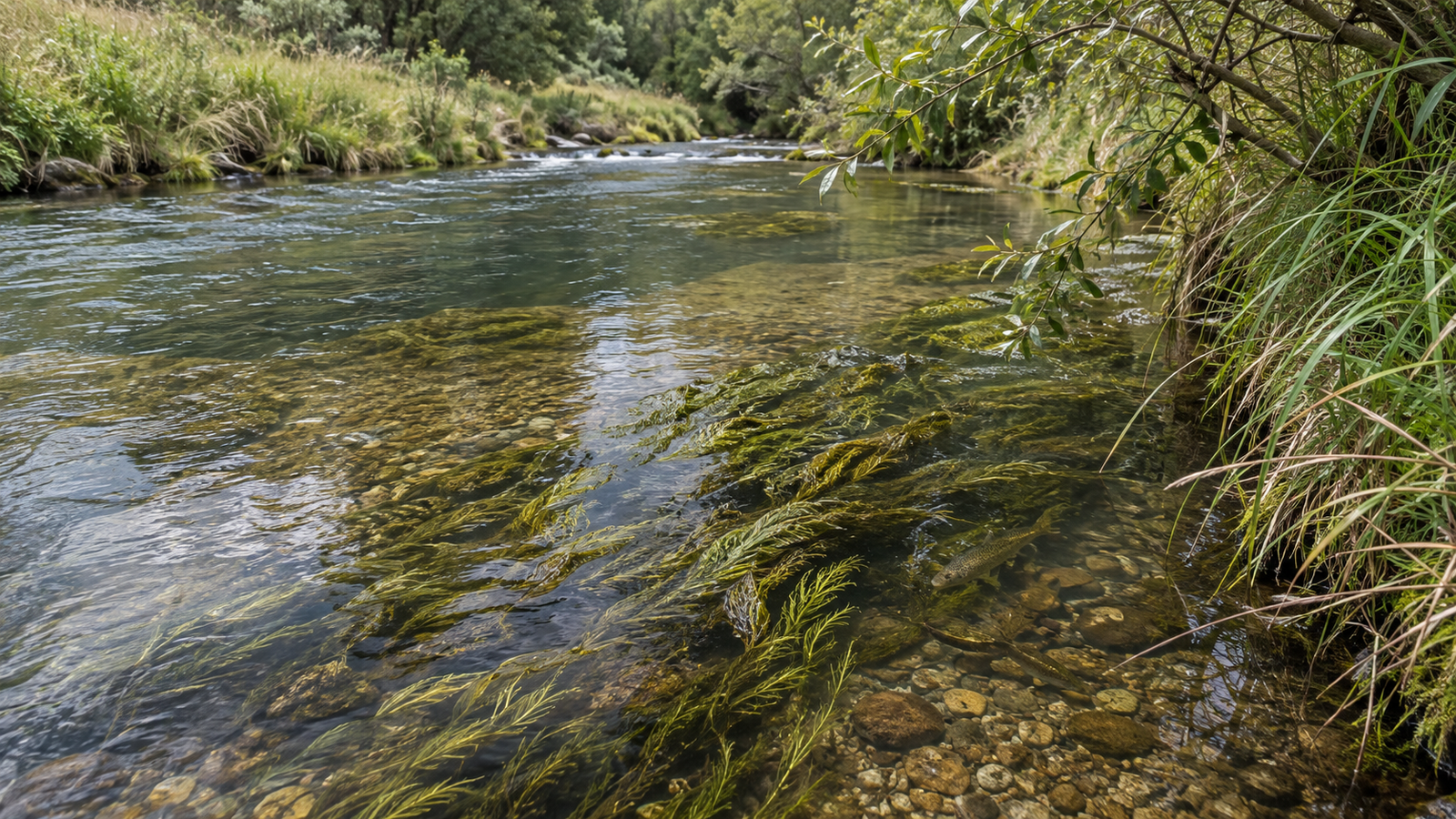
Weeds & Vegetation
Aquatic vegetation can slow current, provide cover, and support insect life. Trout may hold along weed edges, openings, and current lanes running beside vegetation.
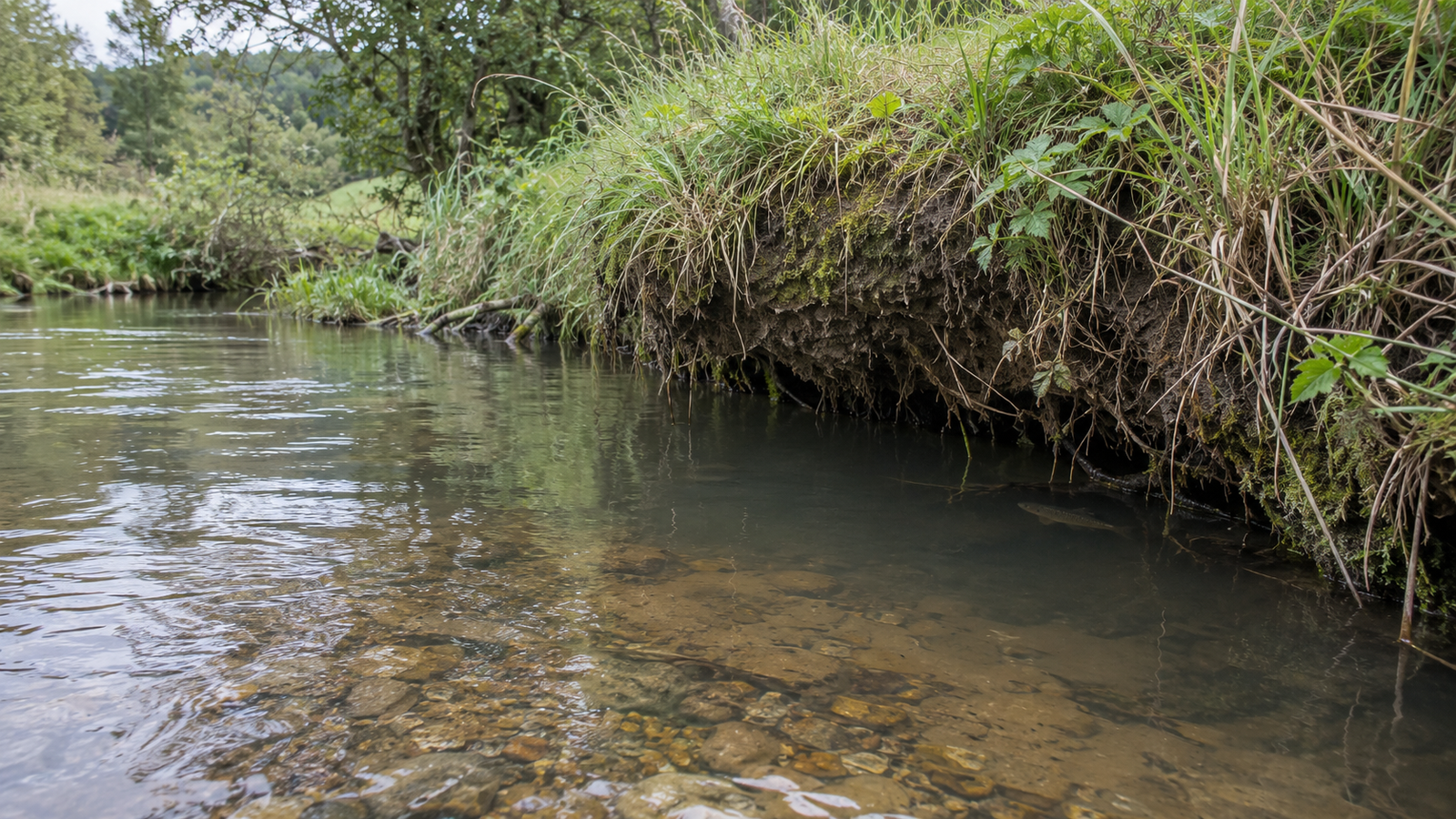
Undercut Banks
Current can erode beneath stream banks and create protected cavities. These areas offer shade, reduced exposure, and access to food moving along the bank.
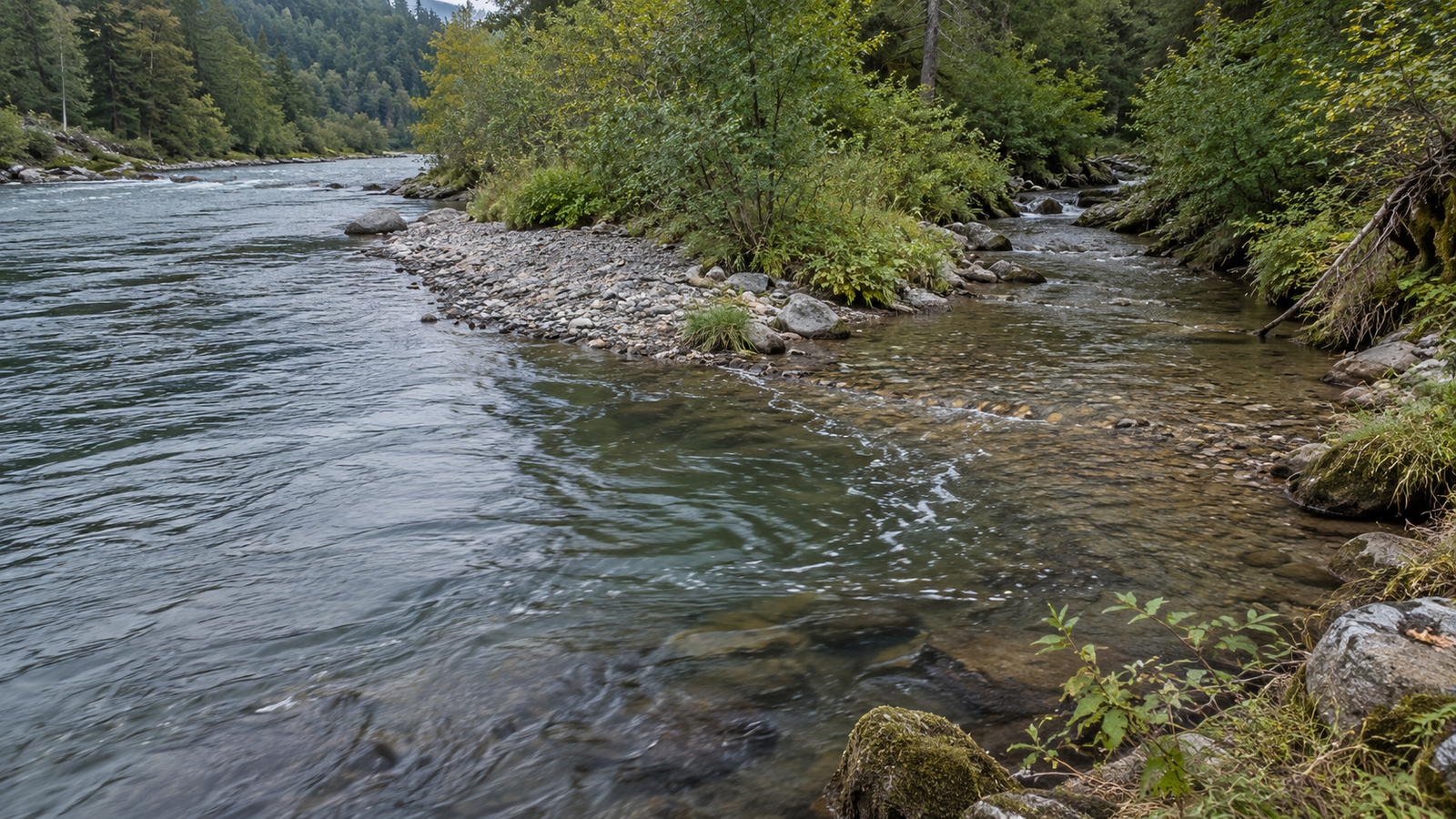
Tributaries & Inlets
Incoming water can create changes in current, temperature, oxygen, depth, and food delivery. Trout may concentrate near the mixing zones formed where two flows meet.
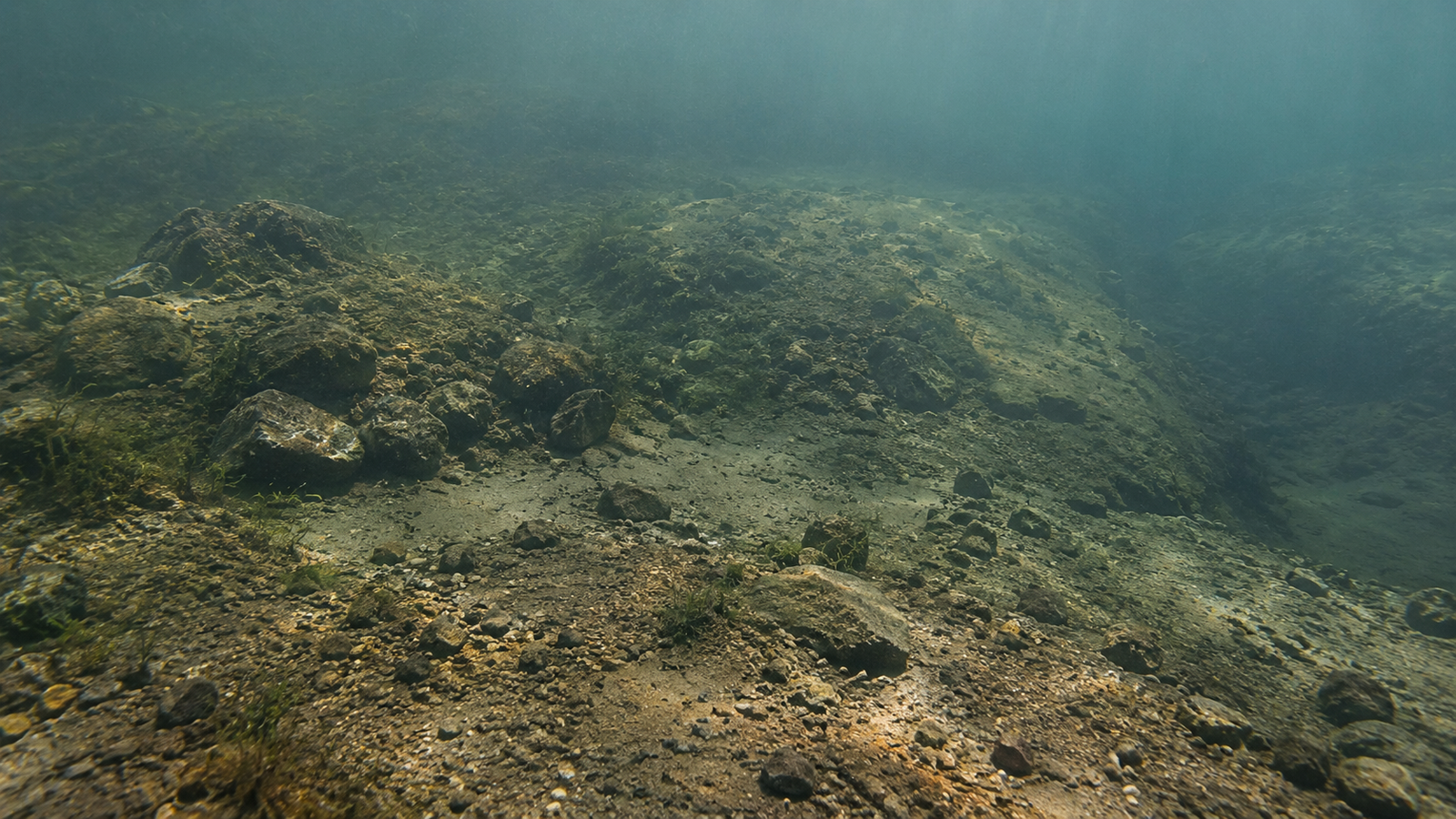
Humps, Depressions & Troughs
Submerged islands, humps, depressions, and troughs change depth and redirect current even when they are difficult to see from the surface. These changes can form productive holding and feeding areas.
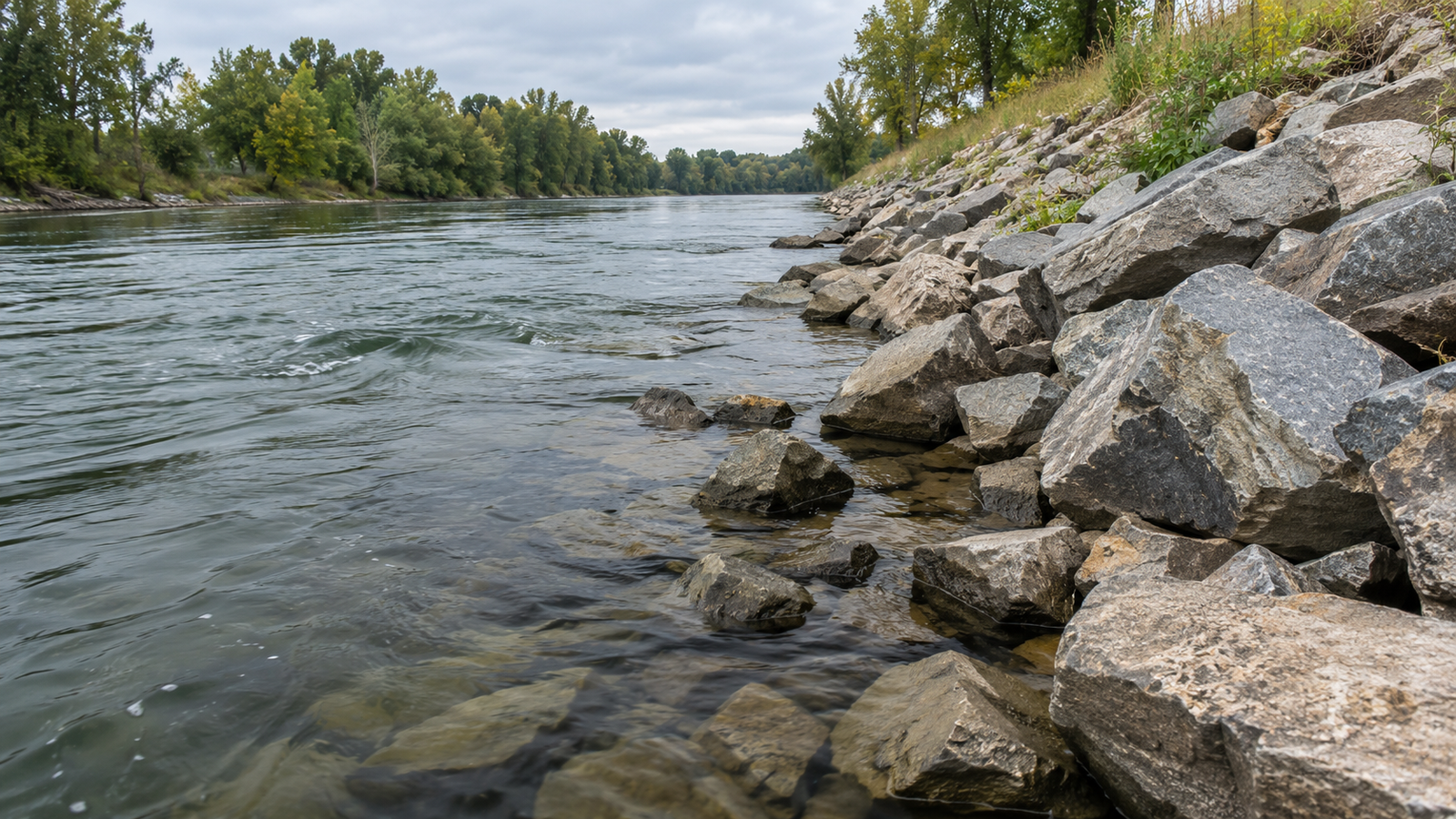
Riprap
Rock-lined banks create irregular current, small pockets, shade, and underwater gaps. Trout may use these areas for cover while remaining close to feeding water.
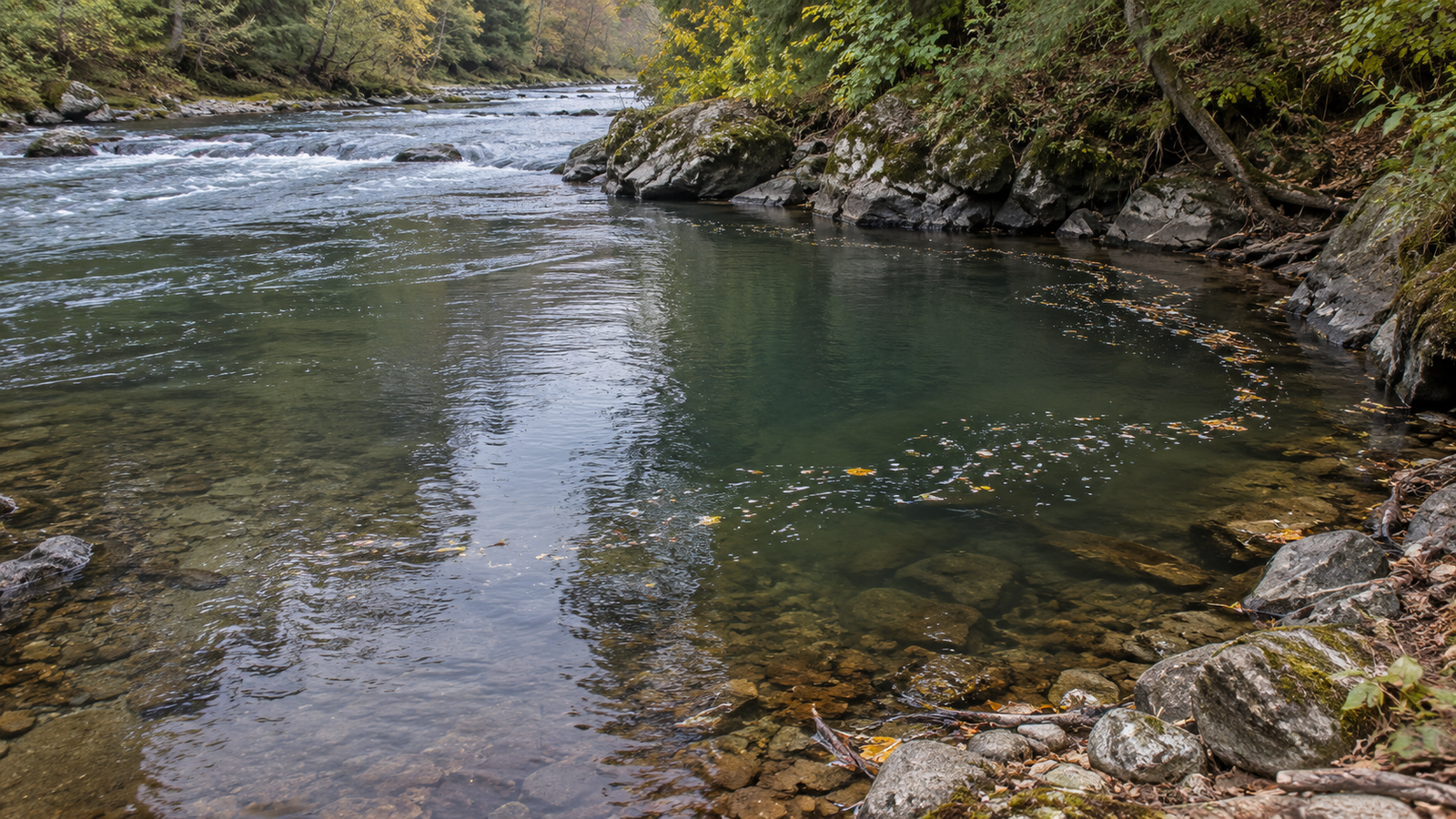
Eddies
Eddies form where water circulates beside or behind an obstruction. Trout can use the slower flow to conserve energy while feeding on food collected or redirected by the circulating current.
HOW TROUT USE STRUCTURE
Productive structure usually gives trout some combination of reduced current, protection, depth, shade, and access to drifting food. Rather than looking only for obvious rocks or logs, study how each feature changes the water around it.
Conserve Energy
Trout often position themselves where structure reduces the amount of current they must fight while still keeping stronger feeding water nearby.
Stay Protected
Depth, vegetation, wood, rocks, banks, and other structure can provide security from predators, bright light, and disturbance.
Stay Near Food
Strong holding water frequently combines protection with immediate access to a nearby current or feeding lane carrying food downstream.
Cover
Sheltered areas within a wetted stream channel where a trout can rest and hide to avoid the impact of the elements or enemies.
Velocity Refuge
Areas of significantly reduced current velocity relative to the main flow, created by flow separation around obstacles or by channel morphology.
Feeding Station
A specific location in the stream where a trout holds position to intercept drifting food items.
Structure is one part of productive trout water. Combine it with current, depth, and holding-water knowledge to understand where fish are most likely to be.