UNDERSTANDING HOLDING WATER
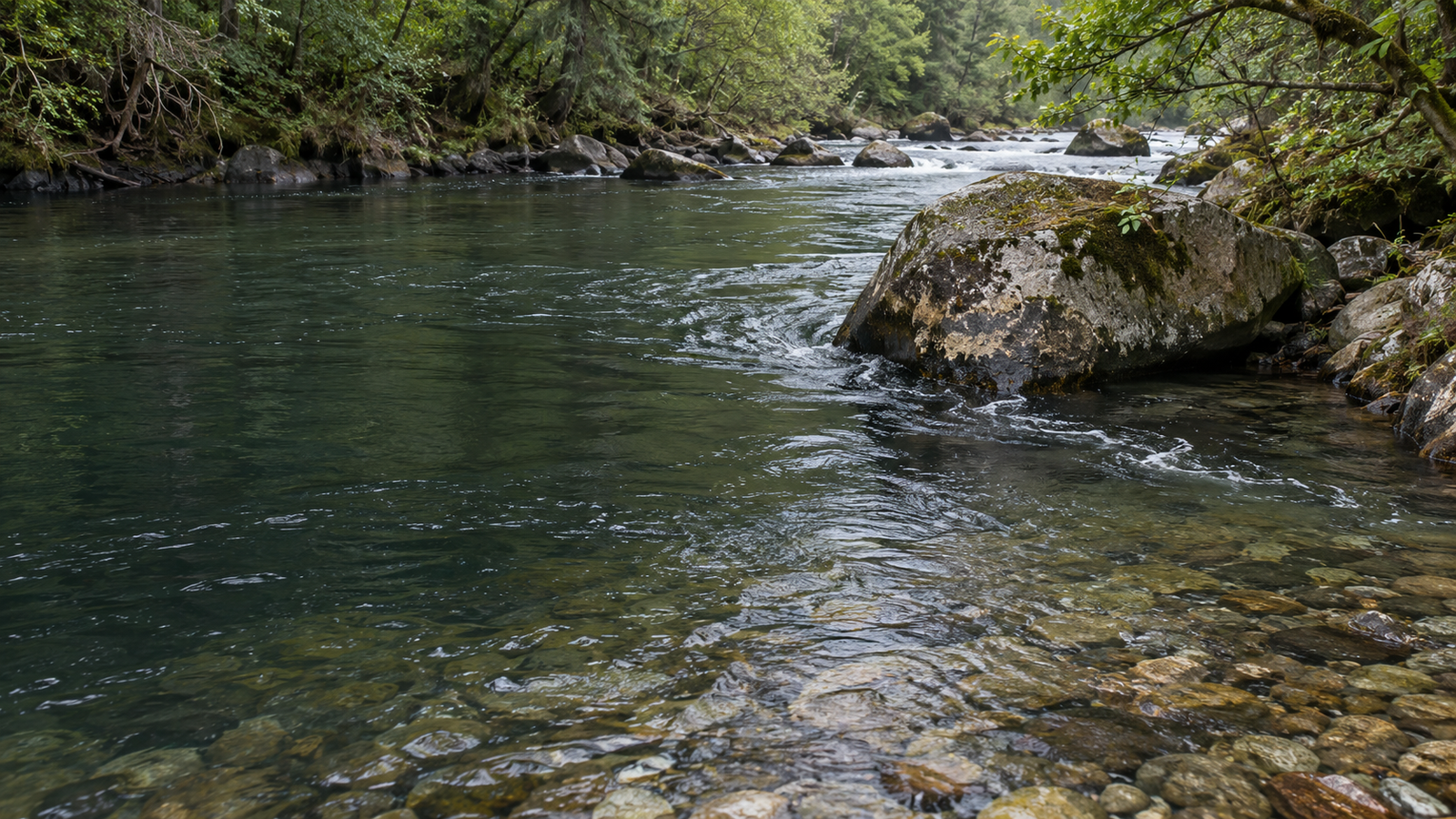
Holding water is where trout rest, conserve energy, and position themselves to intercept food. It is the result of current, structure, depth, and food coming together. Learning to recognize holding water helps you focus on the most productive areas and make better decisions on the water.
Behind Structure
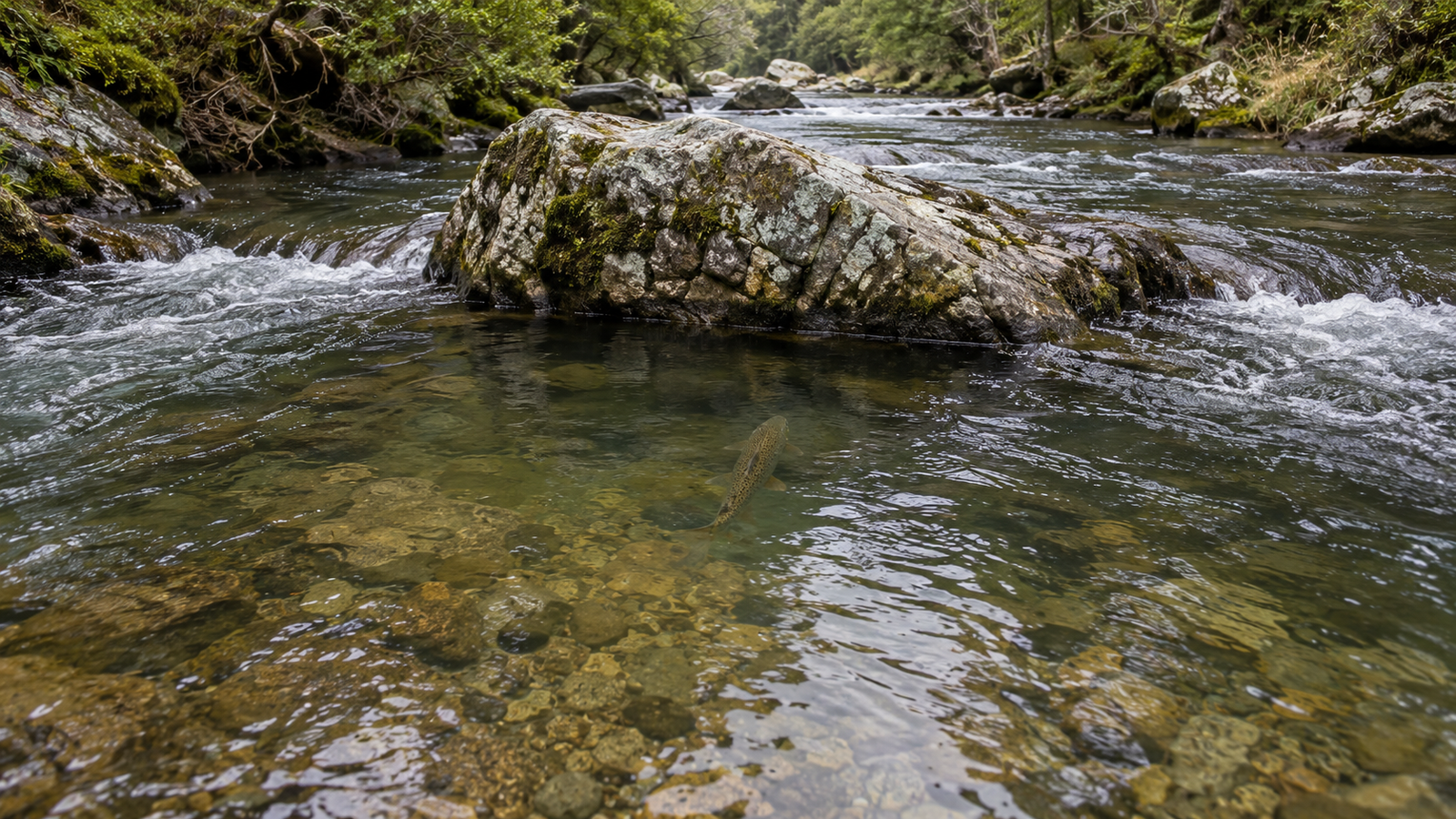
Trout often hold behind rocks, boulders, and woody cover where the current slows and creates a protected area with access to drifting food.
Current Seams
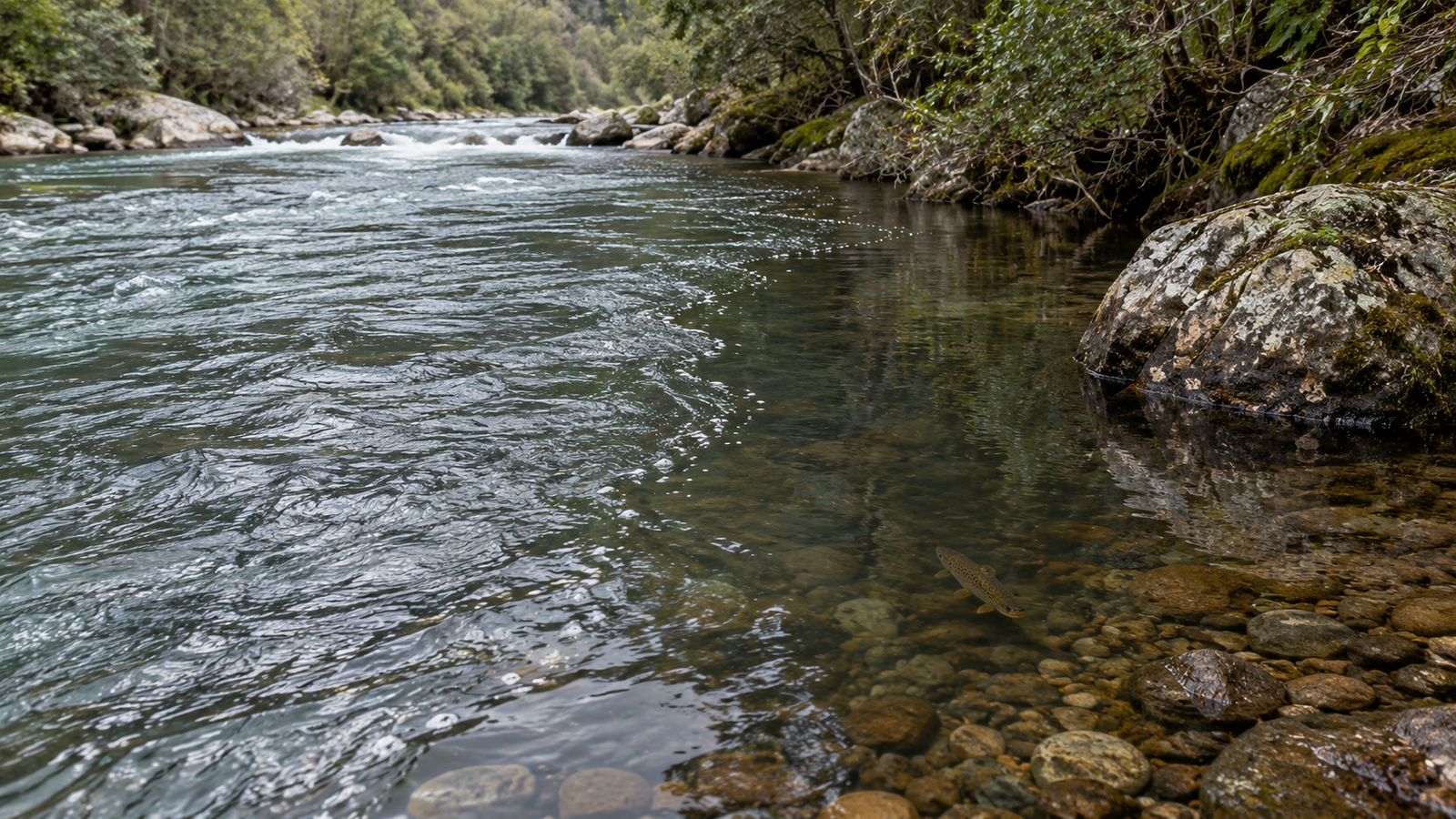
Seams form where faster and slower water meet. Trout can hold in softer water while remaining close enough to intercept food carried by the stronger flow.
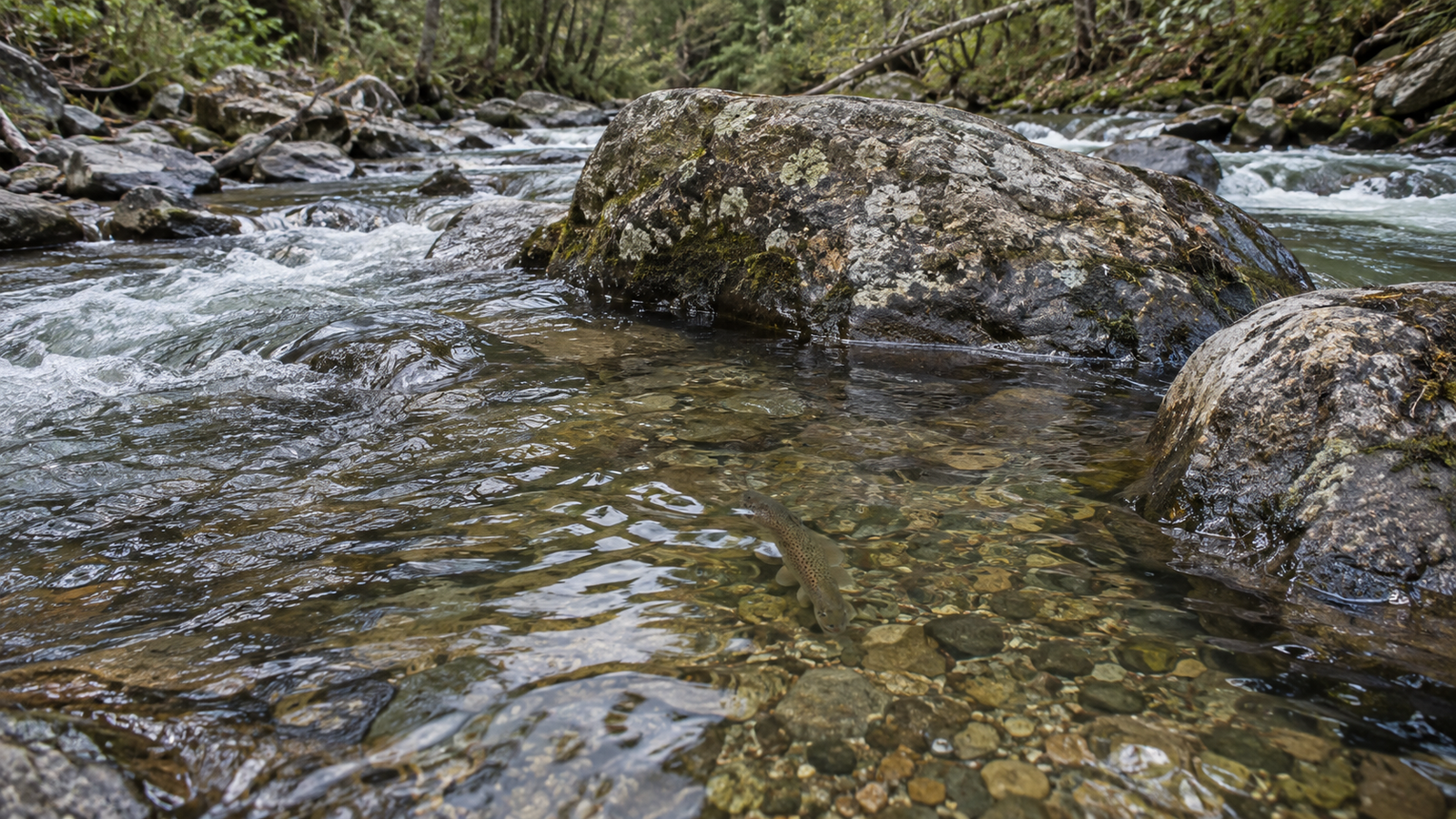
Pocket Water
Pocket water consists of small areas of reduced current around rocks and other obstructions. These pockets provide cover, energy savings, and access to nearby food.
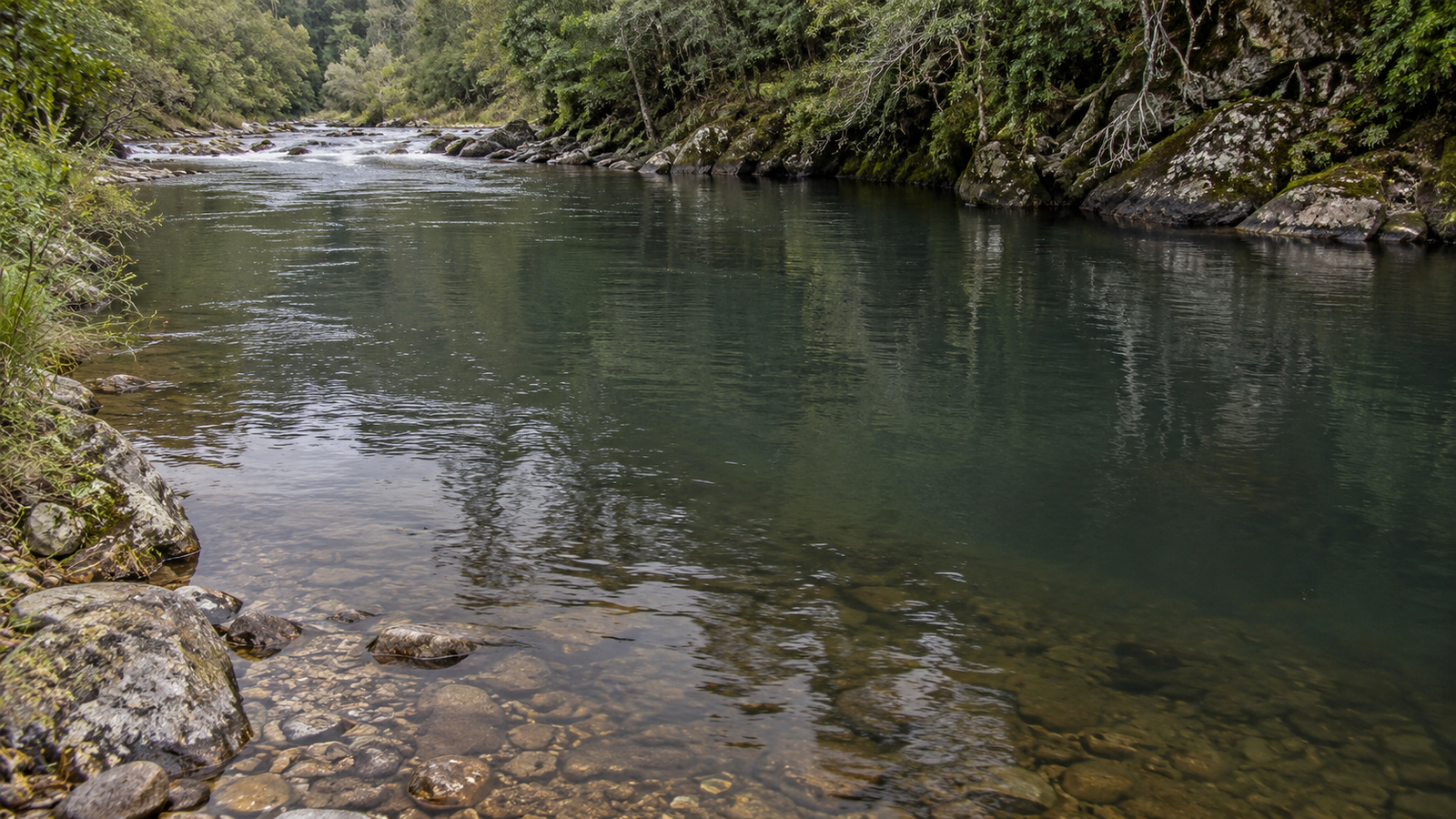
Deep Pools
Deeper pools can provide protection, more stable temperatures, and slower water. Trout often use pool edges and transitions to move between resting and feeding positions.
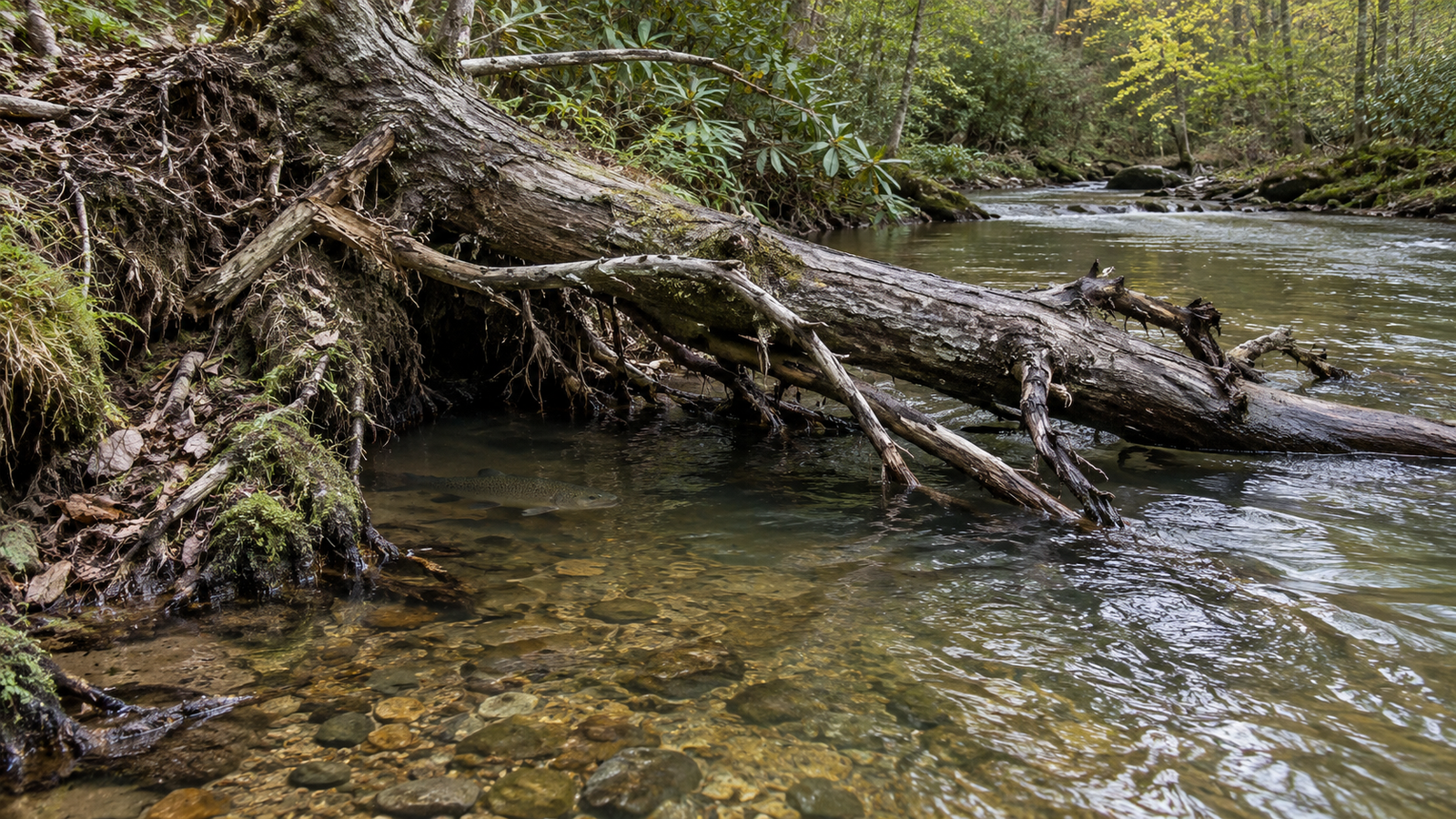
Undercut Banks
Undercut banks provide shade, cover, and protection. Trout may hold beneath the bank in slower water while remaining close enough to the main current to intercept food.
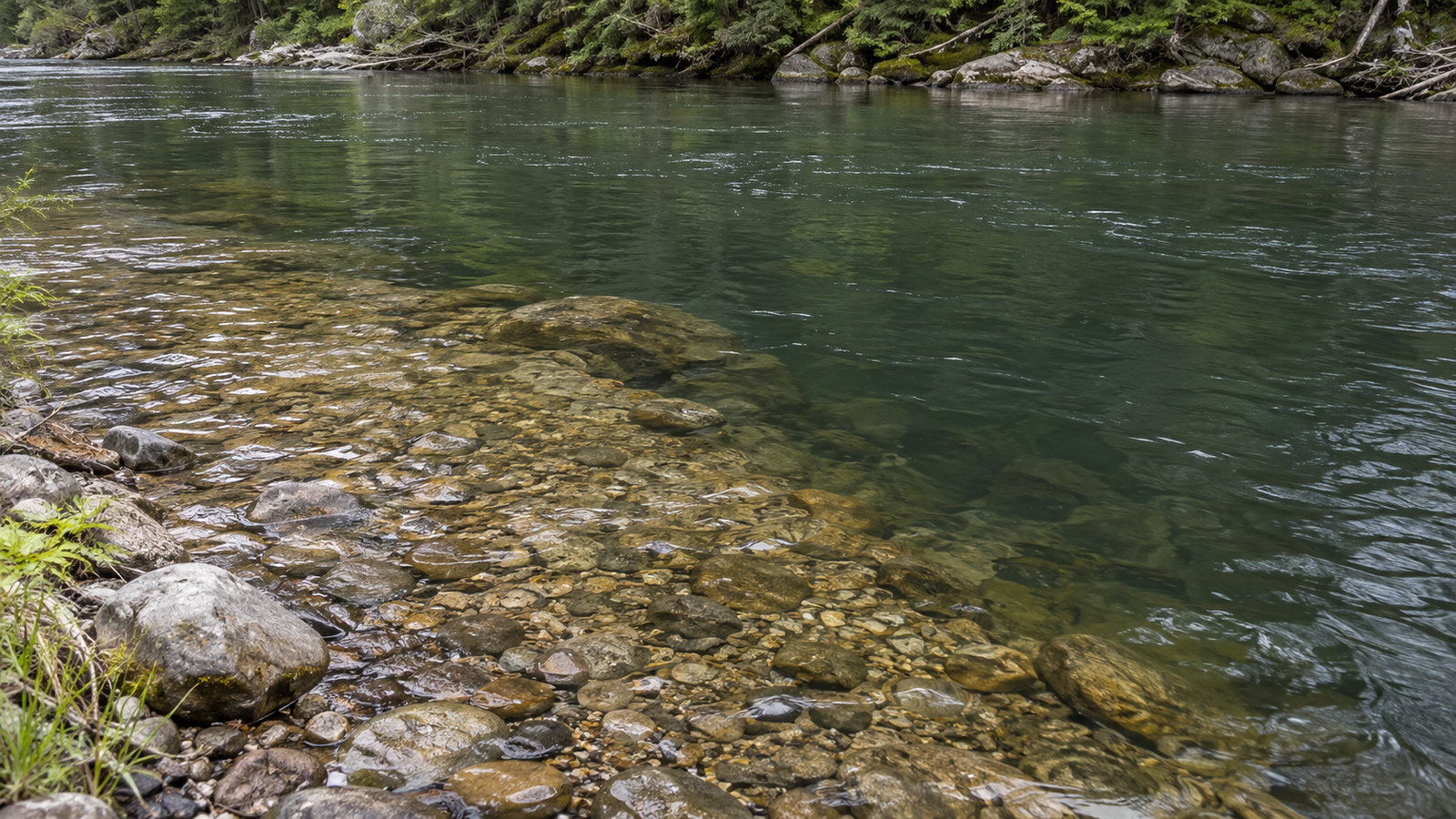
Drop-Offs & Ledges
Drop-offs and ledges create abrupt depth changes that can offer security and a position from which trout can intercept food moving between shallow and deeper water.
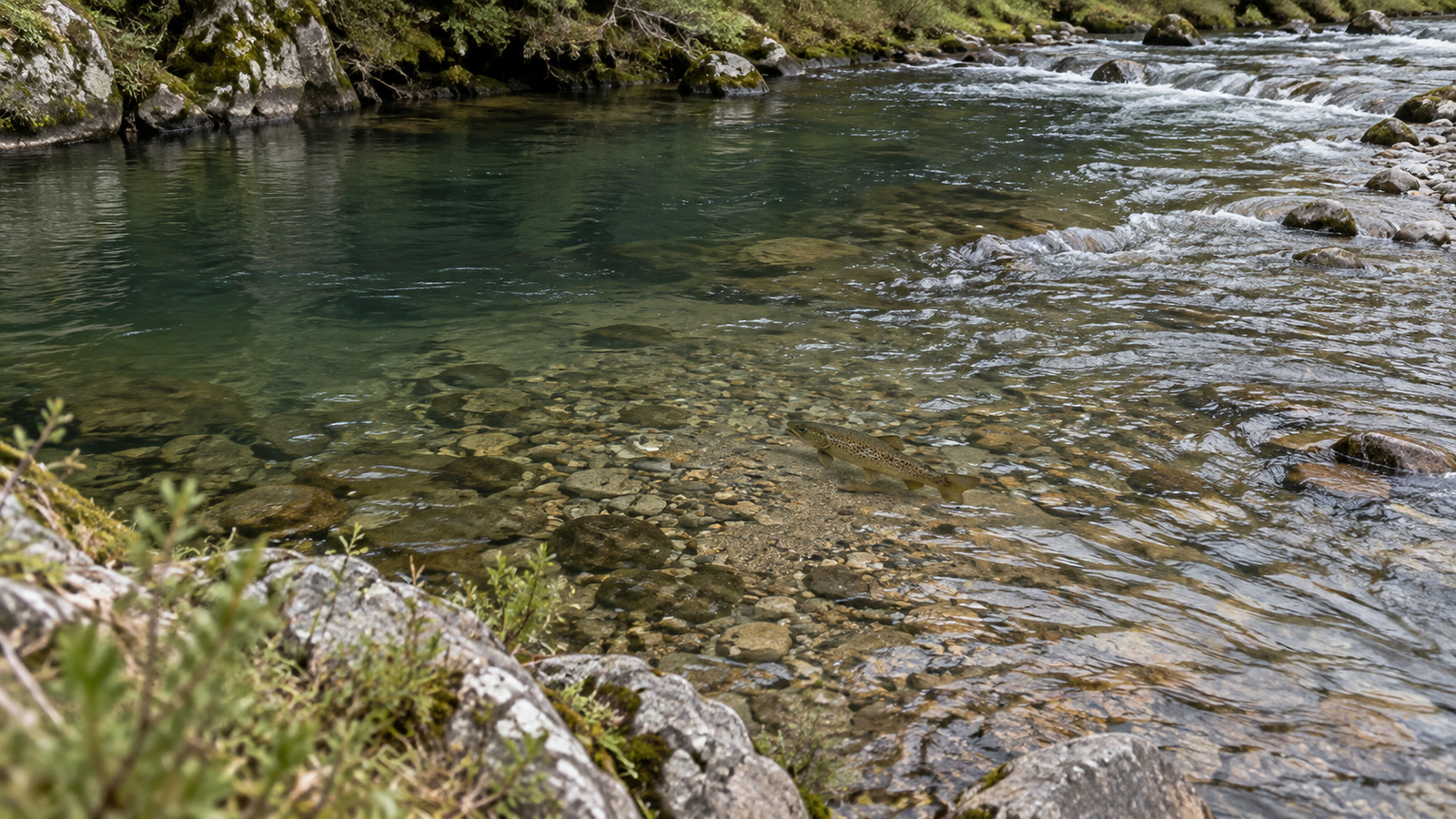
Tailouts
Tailouts form at the lower, shallower end of pools. Trout may use these transition areas when food moves out of deeper water and into the next section of the stream.
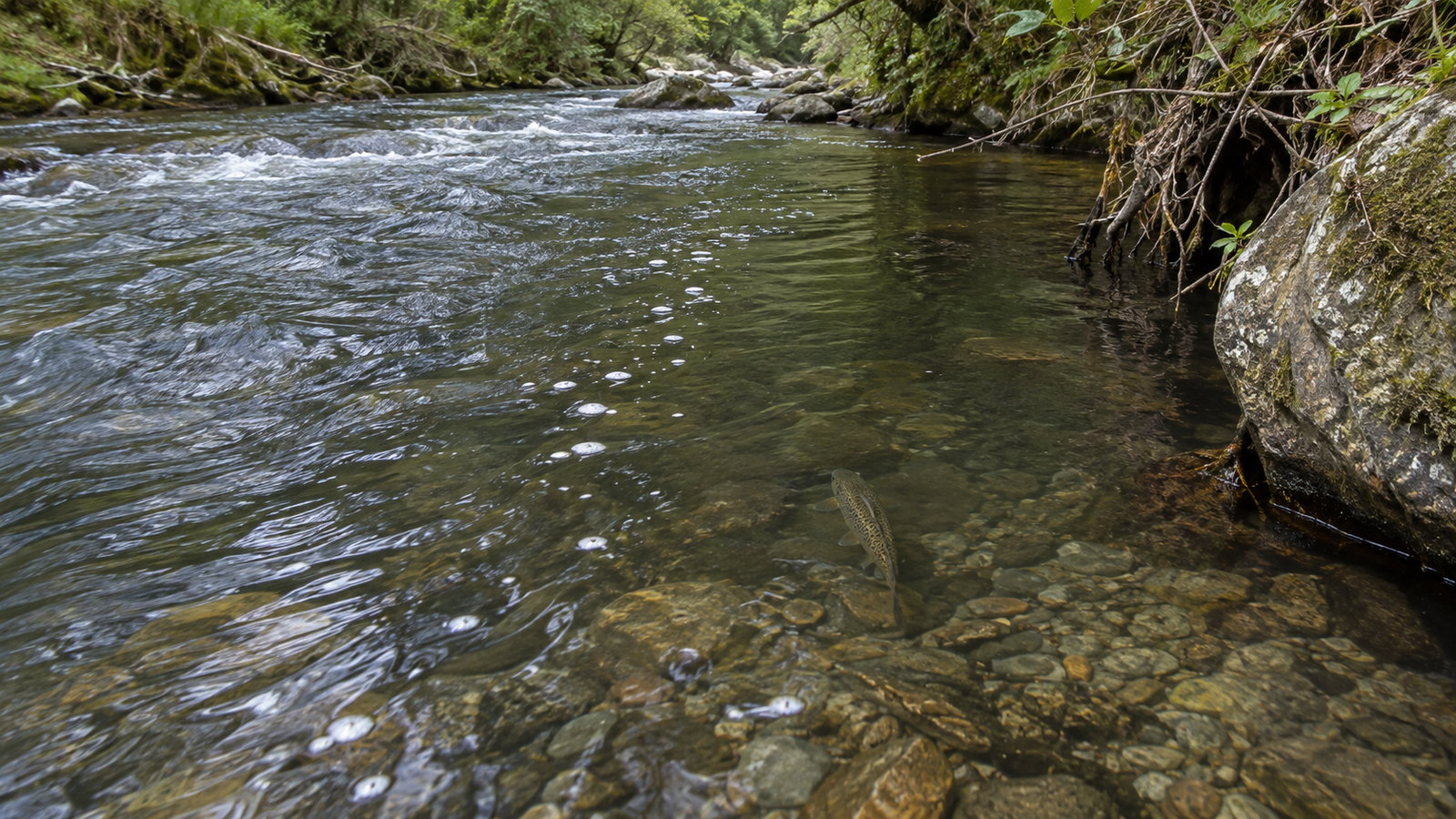
Feeding Lanes
Feeding lanes are consistent paths of current carrying drifting insects and other food. Trout often position beside or within these lanes where they can feed efficiently.
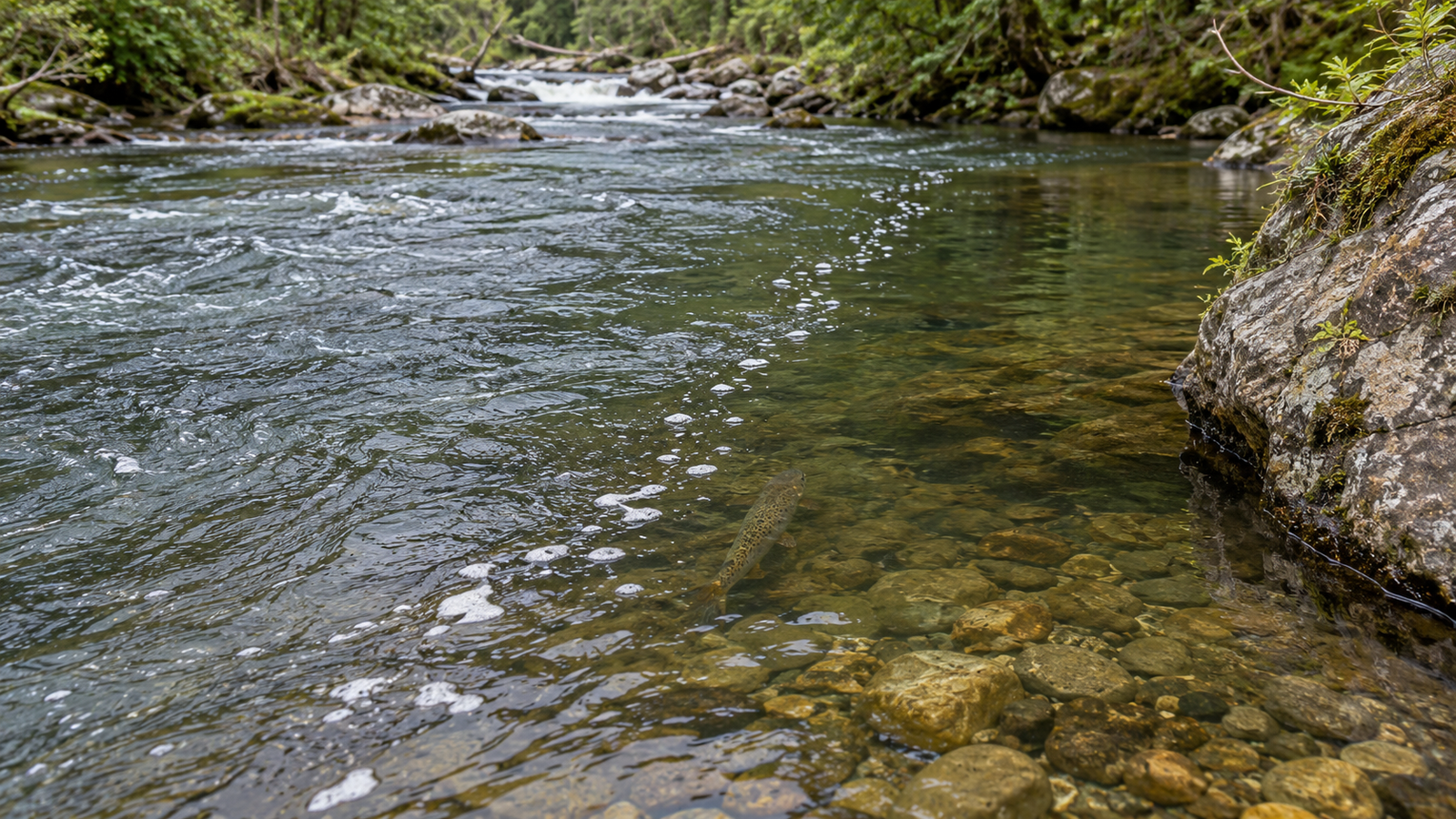
HOW TO IDENTIFY HOLDING WATER
Look for the combination of current, structure, depth, and food. Ask yourself four questions before making the cast.
Where Is the Current?
Identify the main flow and look for slower water immediately beside, behind, or underneath it.
Where Is the Cover?
Look for rocks, woody debris, vegetation, undercut banks, shade, depth, and other protection.
Where Is the Depth?
Identify pools, channels, drop-offs, ledges, troughs, and shallow-to-deep transitions.
Where Is the Food?
Look for current seams, bubble lines, and feeding lanes capable of carrying drifting food toward the holding position.